
Practical guide · Ages 3–5 · School Readiness · PSB-0240
A garden theme becomes more meaningful when children investigate questions instead of simply completing five flower crafts. What makes a plant different from a rock? How do we know a seed has changed? What do rain, sunlight and roots do? A week of age-appropriate observations and playful modeling can help preschoolers make predictions, record evidence and revise their ideas without pretending that every plant will grow on schedule.
This plan connects directly with Pre-School.online’s Month 7 Plants, Gardens & Weather curriculum, which includes plant observations, vocabulary, weather and hands-on activities. It is a separate five-day inquiry unit: each day begins with a question, includes a short activity and ends with one observation to carry into the next day. Adults control real seeds, soil, tools, unknown plants and water; young children are invited to observe and help safely.
- For families and preschool educators
- Play-based, practical guidance
- Adaptable for diverse learners
Key Takeaways
- Structure the week around questions and observations rather than promises of rapid germination.
- Use multiple ways to show learning—talking, pointing, drawing, building and comparing pictures.
- Keep real gardening safe: verified plants, adult-controlled materials, handwashing and no tasting unknown plant parts.
Before You Begin
Prepare photographs of a seed, sprout and mature plant; a safe nursery starter or verified classroom plant; large blocks; a clear observation notebook; crayons; and a small watering cup. Adults verify plant identity and select safe materials. Keep small seeds, fertilizer, tools, pesticides, soil bags and unknown plant material inaccessible when not directly supervised. Plan one ten- to fifteen-minute inquiry activity daily, plus a brief optional observation.
A useful approach: Model an activity once, invite a child to try it without pressure, then change one part of the task if it is too easy or too difficult. Children can watch, point, move or speak to participate.
Eight Practical Strategies and Activities
1. Day 1: ask what counts as a plant
Present a rock, a plastic leaf picture and a living plant in a stable pot. Ask “What do you think makes something alive?” Accept provisional explanations such as “It grows” or “It needs water.” Invite children to draw the living plant and label one part with adult help. Do not insist on a textbook definition; create a question board with two children’s questions to revisit on Friday.
2. Day 1 extension: build a seed-to-flower model
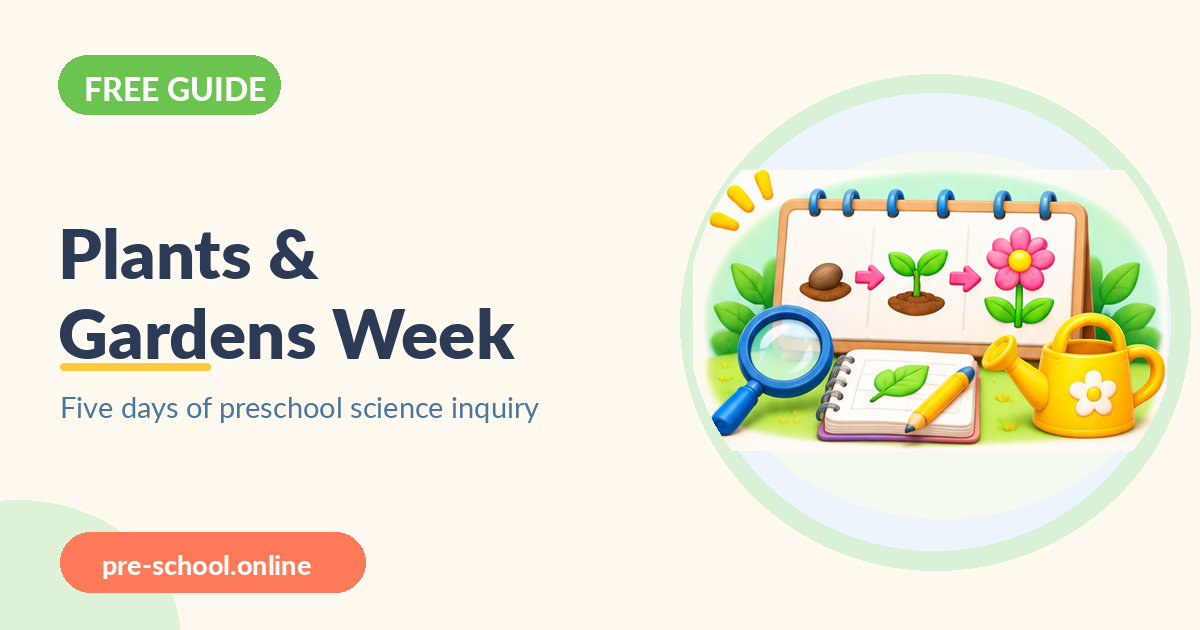
Use three large picture cards: seed, sprout and flowering plant. Put them in an order, then deliberately mix the order and ask what changed. Children can build each stage with large blocks or modeling materials suitable for their age. Explain that a seed does not become a flower overnight and not every plant blooms. The model is a way to think about change, not a photograph of what a single seed will do this week.
3. Day 2: investigate what plants need
Show the safe classroom plant and ask “What could help this stay healthy?” Children suggest light, water, air or care. An adult determines actual watering needs and checks safe light conditions. Set up two labeled drawings—“our idea” and “what we notice”—so children learn that a prediction can change. Avoid experiments that deliberately mistreat a living plant or invite children to taste plants.
4. Day 2 extension: measure without pressure
Compare the plant’s height with stacked chunky blocks or a paper height strip while keeping hands off delicate stems. Let children count the blocks or compare short and tall photos. Explain that measuring once is a starting point; a useful comparison may require days or weeks. Children can draw the same leaf each day to detect subtle differences in shape or color.
Related free activity: Open the Plants and Gardens Curriculum provides a relevant follow-up. The steps on this page can be used even without clicking away.
5. Day 3: follow the weather
Observe sunlight, wind or clouds from a safe window or supervised outdoor spot. Draw a sun, cloud or raindrop symbol on a simple chart. Ask “Did our plant look different when the window was sunny?” Do not promise a direct cause from one observation. For families in hot or cold climates, adapt the observation to local weather and avoid exposing children to unsafe heat, lightning or strong winds.
6. Day 3 extension: experiment with light and shadows
Use a paper leaf shape and flashlight handled by an adult to make shadows on a wall. Move the light source slowly and notice how the shadow changes. Connect this to leaves blocking some sunlight, while explaining that the flashlight is a model, not the sun. This indoor extension is useful when outdoor weather is unsuitable. Never shine bright lights into anyone’s eyes.
7. Day 4: meet garden helpers safely
Show pictures of bees, worms, butterflies and ladybugs and ask what each might do in a garden. Discuss that some insects help with pollination or soil processes, but that not every insect should be touched. Use a magnifier to observe from a respectful distance outdoors with supervision. Do not encourage collecting unknown insects, mushrooms or plants in jars or pockets.
8. Day 5: revisit the evidence and tell the story
Lay out the week’s drawings, weather marks and plant photos. Ask “What did we notice? Which question do we still have?” Encourage children to retell in an order—first we wondered, next we looked, then we compared—without claiming every prediction was right. Invite one new question for the following week. Place the plant where an adult can continue appropriate care, and close with cleanup and handwashing.
At Home and in the Classroom
At home
Use one small safe plant, photos and simple weather observations. Keep the daily activity short and allow a child to revisit the same question for several days. Families without a garden can use a windowsill plant or photographs; no outdoor patch or purchased kit is necessary.
In the classroom
Set up a supervised inquiry table with large picture cards and teacher-controlled gardening materials. Offer multiple participation roles: observer, drawer, photo helper or question asker. Avoid exposing children to small loose seeds or unknown outdoor plants. Assign adult responsibility for watering, tools and all products.
For either setting, notice which parts of the activity the child chooses independently, where adult support helps, and whether the task still feels enjoyable. Keep the goal small enough to revisit without turning play into a performance test.
A Worked Example
On Monday, a group predicts that a bean plant will grow taller by Friday. The actual classroom plant changes very little. On Friday, their drawings reveal a new pale leaf but no obvious height increase. The teacher says, “Our prediction did not happen as we expected; we found another change.” A child asks whether light matters. The group adds that question to the next week’s observation board. This is strong preschool inquiry because the evidence changed the conversation.
Why this example matters: The adult responds to what actually happens, adjusts support, and makes room for the child to participate. That kind of responsive teaching is more useful than insisting every child complete an identical set of instructions.
What to Notice and Record
Write down a brief observation rather than grading the child. It can be one sentence such as “Today, the child looked at the picture before choosing a response.” Compare it with later attempts and remember that children may show a skill differently in different environments.
| Look for | Possible observation |
|---|---|
| Inquiry | Compares two plant or weather observations |
| Revising ideas | Notices when a prediction needs changing |
| Adult support | What prompt, change of materials or break made participation easier? |
| Child choice | Which action, question or approach did the child choose on their own? |
These notes are an informal planning aid, not a diagnostic screen. If a family has persistent concerns about daily functioning, communication, hearing, movement or development, a qualified professional can offer individualized guidance.
A Five-Day Practice Plan
Use these small invitations as a flexible starting point. On a busy day, two or three minutes of engaged play may be more valuable than finishing the whole activity. Repeat a favorite rather than moving on automatically.
| Day | Inviting activity |
|---|---|
| Monday | What is a plant? Compare a living plant with pictures and create a question board. |
| Tuesday | What helps plants live? Make predictions and measure a safe plant. |
| Wednesday | How does weather change? Record sun/cloud symbols and explore leaf shadows. |
| Thursday | Who visits a garden? Observe garden helpers from a safe distance or with photographs. |
| Friday | What did we find? Compare drawings, revisit predictions and choose a new question. |
At the end of the week, ask the child which experience they want to repeat and note one change you observed. The plan is not a requirement to master a skill in five days; it is simply a way to revisit useful play with varied examples.
Adaptations for Different Learners
- For emerging speakers, provide yes/no choices, pointing and picture sequencing rather than full verbal explanations.
- For curious older preschoolers, compare two observations and ask what information is still missing.
- For children with mobility or sensory needs, offer tabletop photographs, accessible plant placement and adapted tools or observation roles.
For preschoolers who have individualized education or therapy plans, follow their team’s recommendations and adapt the activity for access and comfort. Family language, culture, interests and communication style should shape the invitation—not be treated as barriers.
What Matters Most — and Common Misunderstandings
Inquiry does not require every child to use scientific vocabulary or complete a matching worksheet. A picture, question or careful gesture can express a scientific idea. Real data can be incomplete or unexpected, especially in a one-week plant study. The goal is to make thoughtful observations and revise ideas, not to manufacture a guaranteed result.
When Things Do Not Go to Plan
If no growth is visible, review the recorded photos and choose a longer observation period. If a plant begins to wilt, adults should check safe care needs without blaming children. If a child handles or ingests unknown plant material, seek guidance from local poison services or medical professionals promptly. For outdoor insect observation, set a firm look-but-do-not-touch rule and move indoors when conditions are unsafe.
Frequently Asked Questions
Can we do the theme without planting seeds?
Yes. A known safe nursery starter, plant photographs and hands-on models allow meaningful observation while avoiding loose seed materials.
What if nothing grows during our week?
That is normal. Review what did or did not change, preserve the prediction, and continue observing on later days.
Are garden bugs safe for preschoolers to handle?
Do not encourage handling unknown insects or wildlife. Use pictures or observe from a safe distance under adult supervision.
What learning areas does the theme cover?
The activities connect observation, vocabulary, measurement, sequencing, drawings, weather awareness and cooperative discussion without demanding formal academic testing.
Try a Relevant Free Preschool Resource
Continue with the specific Pre-School.online guides below when they match your child’s interests and needs. The teaching ideas above are complete on their own, and the linked resources are optional practical extensions.
Open the Plants and Gardens CurriculumExplore Plant and Flower Coloring Pages
Sources and Further Reading
- Pre-School.online — Month 7 Plants, Gardens and Weather
- CDC — Wash Hands After Touching Soil
- Poison Control — Plant Identification and Safety
- Pre-School.online — Relevant Free Resource
Educational information for families and teachers; not an individual diagnosis or medical advice. Adults are responsible for supervision, product instructions, recalls, accessibility, local rules and seeking individualized professional help when needed.