
Free practical guide · Ages 3–5 · Early Learning Skills · PSB-0249
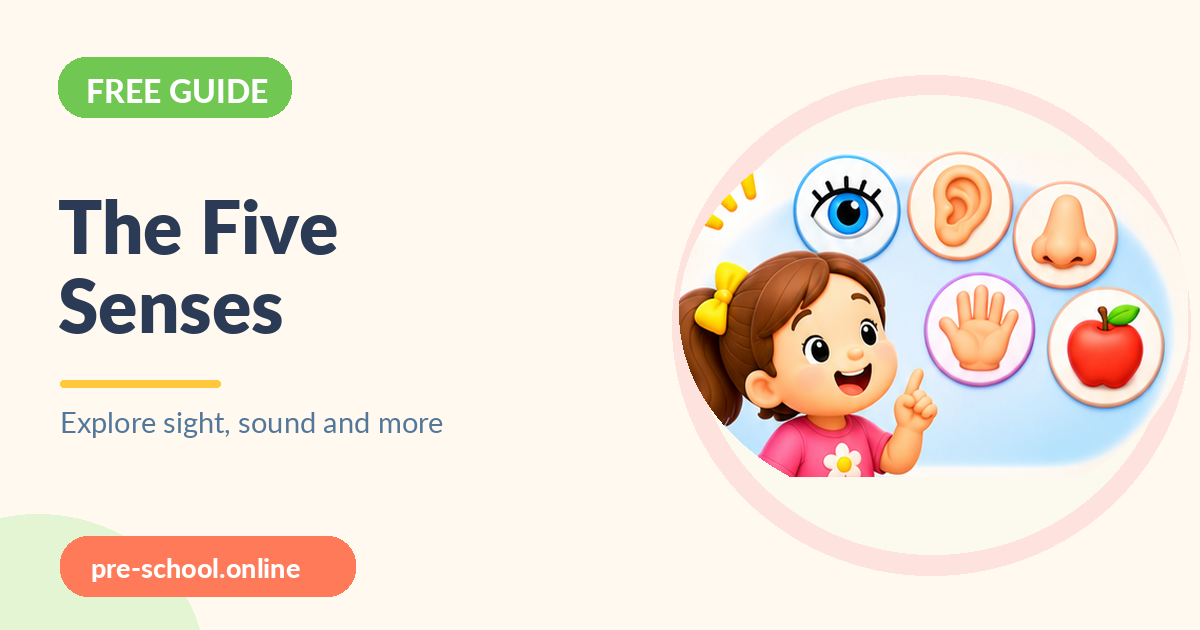
Preschoolers are already studying their world when they notice a loud truck, a smooth stone or the smell of dinner. A five-senses unit gives adults useful language for those observations without asking children to put unfamiliar materials in their mouths or tolerate uncomfortable sensations. Start with what is safe and familiar, invite children to notice differences, and make participation optional.
The traditional labels—sight, hearing, smell, taste and touch—offer a simple starting point for early science. They are not a complete model of human sensory processing. Children experience sensations differently, and disabilities or sensory differences should be accommodated rather than framed as failure. The goal is to notice how we gather information and communicate observations respectfully.
- For families and preschool educators
- Hands-on and age-appropriate
- Adaptable for real classrooms
Key Takeaways
- Preschoolers are already studying their world when they notice a loud truck, a smooth stone or the smell of dinner.
- Gather a soft cloth, a large textured book, an unbreakable cup, picture cards, a familiar fruit if families have approved food use, and a quiet sound such as a gentle clap.
- The five senses are a preschool-friendly introduction rather than an exhaustive account of sensory systems.
Why This Approach Matters
The traditional labels—sight, hearing, smell, taste and touch—offer a simple starting point for early science. They are not a complete model of human sensory processing. Children experience sensations differently, and disabilities or sensory differences should be accommodated rather than framed as failure. The goal is to notice how we gather information and communicate observations respectfully.
Starting point: A useful preschool activity should make room for the child to look, move, talk, point, draw or participate in another accessible way. Adults can model once and then adjust the activity instead of increasing pressure.
Before You Begin
Gather a soft cloth, a large textured book, an unbreakable cup, picture cards, a familiar fruit if families have approved food use, and a quiet sound such as a gentle clap. Avoid mystery tasting, strong fragrances, essential oils, loose beans, tiny objects, raw flour, or sensory materials children may mouth. Check allergies, food policies and individual plans first. Children may choose to observe rather than touch or taste.
Eight Practical Activities and Strategies
1. Sight: Notice two details in a picture
Show a familiar large illustration and ask, “What is different about these two things?” Children might identify a red apple and a green leaf or notice where a character is looking. Invite pointing or verbal descriptions. Do not require children with visual impairments to perform a visual matching task; use tactile or verbal alternatives shaped by their support plans.
2. Hearing: Compare gentle everyday sounds
Make two quiet sounds, such as tapping a table softly and rustling paper. Ask which one lasted longer or sounded different. Keep volume comfortable and avoid sudden bangs near ears. If a child uses hearing support, let them choose the preferred position and means of response. The task is to attend to a difference, not guess an unseen source perfectly.
3. Touch: Explore a safe large-texture pair
Offer a smooth cloth and a textured fabric patch firmly attached to a large card. Children can touch with a fingertip, back of hand, tool or not at all. Describe rough, smooth, soft and firm without insisting on a single favorite. Avoid blindfolding children or placing unknown objects into a bag and requiring tactile contact.
4. Smell: Use familiar, optional observations
Ask whether a child notices an ordinary classroom smell, such as clean paper or fresh fruit being prepared under approved food policies. No scented liquids, perfume spraying or forced close smelling is needed. A child who cannot smell or dislikes scent can discuss pictures or describe other observable features. Sensory participation should never depend on tolerating irritation.
Free related resource: For additional ways to practice, explore Pre-School.online’s relevant early learning skills resource. The steps in this article can be used on their own.
5. Taste: Talk about familiar foods without mandatory tasting
If a food experience is appropriate, consult families and program allergy rules first and use a familiar, age-appropriate food that is cut safely. Ask whether the child likes its taste, without pressure to eat. A pretend food-sort activity is a full alternative. Do not encourage taste tests using random classroom objects, plants, liquids or cleaning materials.
6. Build a “which sense helps?” story
Tell a short story: “The child heard a bell and saw a yellow bus.” Ask how the character knew the bus had arrived. Allow multiple responses—hearing and seeing may both matter. Children can draw or act out the scene. This moves beyond memorizing five words toward understanding that people use more than one source of information.
7. Compare using precise descriptive language
Lay out a few safe large objects and invite children to describe them in different ways: bright, quiet, smooth, heavy, soft. Some words describe properties other than the five named senses; that is useful too. Model “I notice” rather than “This feels nice,” because the same texture may be comforting to one child and unpleasant to another.
8. Create an inclusive senses museum
Let children contribute drawings, words, pictures, safe objects or recorded descriptions of everyday observations. Provide a quiet station and opt-in participation. A child might contribute an image of a favorite song, a soft fabric swatch or a drawing of a fragrant flower rather than a real plant. The exhibit celebrates different ways of knowing, not identical experiences.
At Home and in the Classroom
At home
Use everyday moments: describe a soft towel after bath time, notice a familiar food smell during dinner or compare gentle household sounds. Do not create elaborate sensory trays or ask a child to sample unfamiliar substances just for a lesson.
In preschool or a group
Provide multiple stations with adult-selected materials, non-sensory alternatives and a quiet observation option. Consult family allergies, accessibility plans and cleaning procedures. Keep small loose materials and chemical scents out of preschool science play.
In either setting, watch for engagement and comfort. If an activity creates pressure or becomes too complex, offer a smaller entry point and revisit it another day. Learning through play can be both purposeful and responsive.
Worked Example: What It Looks Like
A teacher starts with hearing and touch. One child compares a cloth and a textured card; another keeps their hands in their lap and describes what they see. A child who uses hearing aids asks for the rustling paper to be moved closer. The teacher adjusts without making a public announcement about the child. Later everyone contributes one sentence or picture to a shared “We noticed” board. Different modes of participation are all valid.
Notice the adult response: The activity changes when the situation changes. Supporting a child’s thinking, communication or safety matters more than completing a preset script exactly.
A Flexible Five-Day Plan
This plan is a menu, not a set of milestones to pass. Spend a few minutes on the invitation each day, repeat an activity the child enjoys, and choose the safest materials available in your setting.
| Day | Try this |
|---|---|
| Monday | Practice sight and observation with one picture and a two-detail conversation. |
| Tuesday | Compare two quiet sounds and notice how long each lasts. |
| Wednesday | Explore two safe large textures or discuss their pictures instead. |
| Thursday | Talk about familiar smells and tastes without requiring any sampling. |
| Friday | Tell a multi-sense story and build an inclusive “We noticed” display. |
At the end of the week, note one thing the child asked about, tried, changed or explained. These observations help adults plan the next invitation without assigning grades to preschool play.
Adaptations and Accessibility
- Children with visual or hearing impairments should receive accessible materials and individualized supports; do not frame difference as deficiency.
- Allow opt-in touch and smell, with no blindfolds or mandatory sensory exposure.
- Use home-language descriptions and AAC responses alongside spoken words.
- For children ready to extend, compare how two senses give clues about the same object.
Follow individualized education, communication, sensory or health plans when relevant. A child’s home language, culture and preferences should shape participation rather than be treated as obstacles to learning.
What Matters Most
The five senses are a preschool-friendly introduction rather than an exhaustive account of sensory systems. A meaningful lesson describes what a child notices and accepts different experiences. It should not pressure a child to endure uncomfortable input, eat a food, or identify mystery substances.
Safety and supervision: Adults must assess the specific materials and setting, follow manufacturer instructions and applicable childcare rules, and change or stop an activity when a hazard appears. These examples do not replace individualized safety plans.
When Things Do Not Go to Plan
If a child recoils from a texture, remove the pressure and offer pictures instead. If a food or fragrance triggers any concern, stop the activity and follow the child’s health plan. If loose materials are mouthed, replace them with large, secured items. Sensory curiosity does not require a hazardous experiment.
Frequently Asked Questions
Must all children touch or smell the same item?
No. Observation and alternative responses are valid, and individual sensory preferences should be respected.
Is tasting necessary for teaching the five senses?
No. Use pretend food pictures and familiar examples, especially when allergies or choking concerns exist.
Can a child with hearing loss participate?
Yes. Adapt the questions and tools using the child’s communication and support plan.
What materials should I avoid?
Avoid unknown plants, chemicals, loose small fillers, strong scents and substances children might ingest.
Explore Free Preschool Resources
Use these Pre-School.online pages when they fit your child’s questions and your available time. The practical steps above are complete without needing to buy a kit or click away.
Explore the matching free activitiesSee another relevant resource
Sources and Further Reading
- Head Start: Early Learning Outcomes Framework
- NAEYC: Developmentally Appropriate Practice
- Pre-School.online: Science and Nature Activities
- Pre-School.online — Matching Preschool Resource
Editorial learning guide for families and educators. Educational information is not individualized medical, developmental, emergency or product-safety advice; follow applicable program policies and qualified professional guidance.