
Home › Blog › Reading and Books
After a favorite book, a child may remember the exciting ending but not the events that led there. That is normal; sequencing—putting events in a meaningful order—develops through conversations, everyday routines and repeated stories. The most useful practice is hands-on: three pictures to arrange, three objects to move, or a puppet to guide through the adventure.
You do not need a purchased sequencing set. Begin with a book your child knows, read it for enjoyment, and then choose two or three important moments. Work together to tell what happened first, what happened next and how it ended. A child may tell the story out of order and still show excellent imagination; gently return to one event at a time.
Key Takeaways
- Start with three big events, not every detail of a picture book.
- Model first, next and last while moving pictures or objects.
- Use books children already enjoy and know well.
- Accept gestures, single words and child-led retellings as meaningful participation.
- Link a story sequence to real routines to make the concept concrete.
Sequencing Is More Than Memorizing a Plot
Story sequence connects language with cause and effect: the character wanted something, tried an action and discovered what happened. For preschoolers, it helps to use familiar words like first, then, and last. ‘Beginning, middle and end’ can follow once the idea is concrete.
Ask a small number of questions after reading, not a long comprehension quiz. Point to pictures and say, ‘The rabbit found the key. What did the rabbit do next?’ If the child needs help, give choices or model the order while moving the cards. Retelling is a shared conversation rather than a memory test.
Try this today: Choose the first idea below, model it once, and follow your child’s response. Short, friendly practice gives you better clues than a rushed quiz.
6 Practical Activities You Can Try Today
Each idea includes a clear setup, an action you can model, and an easier or more challenging version. You can use these at home or adapt them for a small preschool group. Stop an activity if the child is uncomfortable or the materials are not safe.
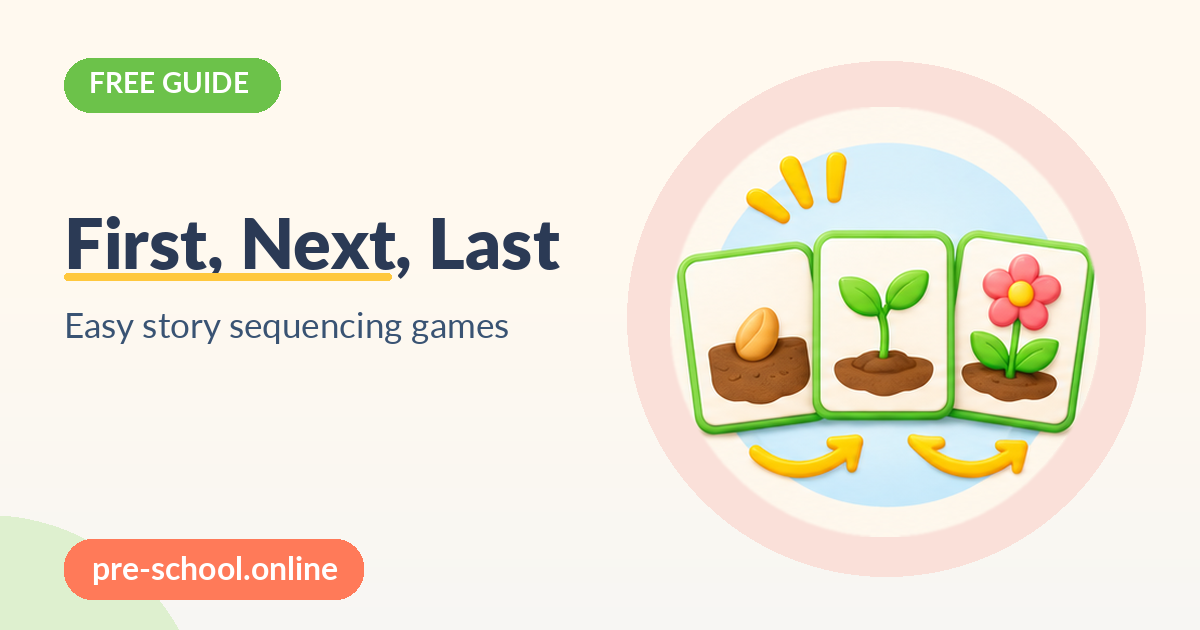
- Three-picture retell
Set up: Draw or copy three simple scenes from a book: character begins, problem happens, solution occurs.
Try it: Mix the cards and say, “Let us put them in story order.” Show the first card if needed, then ask which picture follows. Read the relevant pages again together.
Make it fit: For younger children, offer only first and last. Older children can explain why one event follows another.
- Story objects in a row
Set up: Use three large safe props: a toy animal, a block house and a cloth bridge.
Try it: Retell a made-up trip: the animal leaves home, crosses the bridge, then reaches a friend. Let your child move the objects while saying first, next, last.
Make it fit: Keep props too large to swallow and avoid strings or small pieces.
- Puppet interviews
Set up: Use a stuffed animal as the main character from a familiar story.
Try it: You ask, “What happened before you got lost?” The puppet answers with your child’s help. Encourage the child to correct the puppet when it mixes up the order.
Make it fit: For children who prefer gestures, make the puppet act out the three events instead of speaking.
- A drawing strip
Set up: Fold a page into three panels with thick lines.
Try it: After reading, draw what happened at the start, middle and end. Label the drawings using the child’s words, even if the drawings are symbolic.
Make it fit: If drawing is tiring, let the child choose stickers or point while an adult sketches.
- Act out the story
Set up: Choose a story with three simple actions: wake up, search for a friend, return home.
Try it: Move through the actions in a safe open space. Stop and ask, “What do we do after we look for our friend?” Use the book’s illustrations for support.
Make it fit: Keep movements small in classrooms; tabletop finger puppets work just as well.
- Sequence a real-life activity
Set up: After washing hands, ask what came first: turning on water, using soap or drying hands.
Try it: Write the three steps as picture icons and rearrange them. This bridges a real routine with story language without creating another reading task.
Make it fit: Choose familiar sequences such as planting seeds, preparing a sandwich or getting dressed.
A Gentle Five-Day Practice Plan
Use these as small invitations, not assignments that must be finished. Repeating an enjoyable idea is absolutely fine. On a busy day, one conversation or one five-minute game can be enough.
- Read the chosen book once for pleasure; no question session required.
- On another day, choose just two pages and ask which happens first.
- Introduce three picture cards and model the order yourself once.
- Let a puppet tell the story incorrectly and invite the child to help.
- Draw or act the three events, then reread the book to celebrate the story.
Watch what happens when you change only one thing: the number of choices, the materials, the timing, or the amount of adult help. Keep the version that helps your child participate with confidence, and leave the rest for another day.
Common Problems and What to Try
My child remembers the last page only
Start with that successful memory. Reopen the first page and say what led toward the ending. Use just two cards before three.
My child invents new details
That is storytelling, not failure. Enjoy the new idea, then explain, “That is your version. What happened in the book?”
My child will not answer questions
Make retelling a movement or picture-matching game. A child’s pointing can show understanding before a full spoken sentence.
For educators: Share one concrete observation and one successful adjustment with the family. For families: tell the teacher what your child enjoys and what usually helps. A shared picture of the child’s strengths is more useful than comparisons or blame.
Frequently Asked Questions
When should preschoolers understand first and last?
Children develop this at different rates. Model the words in daily routines and favorite stories rather than using an age-based pass/fail target.
How many sequencing cards should I use?
Start with two or three large clear scenes. Add a fourth only when a child is comfortable and wants a greater challenge.
Does story sequencing help reading?
Talking about order, characters and causes supports language and comprehension. It complements—but does not replace—reading aloud and rich conversation.
Free Preschool Resources to Put This Into Practice
These verified Pre-School.online pages contain activities or learning materials relevant to this guide. Choose the resource that best fits your child’s interest and readiness; there is no need to complete everything.
Related Reading and Resources
Sources and Credits
For educational information only. Activities require age-appropriate materials and adult supervision. This article does not replace medical, developmental, or professional safety advice. Consult a qualified professional about individual concerns.