
Practical preschool guidance · Ages 3–5 · Feelings and Behavior · PSB-0184
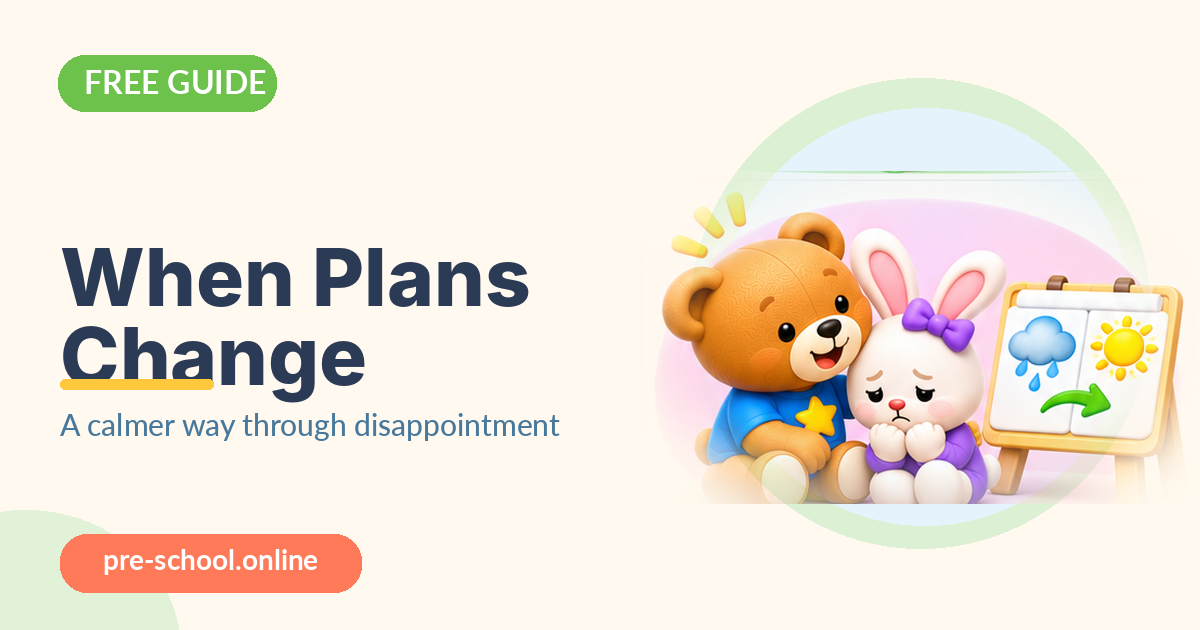
You promised the playground, but rain starts just as you reach the door. Your preschooler drops to the floor and cries that the day is ruined. The feeling may seem disproportionate to an adult, yet the child was holding a real expectation and may not have the words or flexibility to change course quickly.
Helping children handle changed plans does not mean talking them out of disappointment. It means acknowledging what was lost, helping their bodies settle and offering a small, genuine choice about what comes next.
- For parents and teachers
- Hands-on activities
- No expensive supplies
Key Takeaways
- Name the disappointment before offering solutions: “You were counting on the park.”
- Keep new plans honest and concrete; do not promise another activity you cannot deliver.
- Offer two acceptable choices after the child begins to settle.
- Practice small, low-stakes changes during calm play, not as surprise tests.
In This Article
Understand the Goal
Cognitive flexibility develops gradually. Preschoolers may find unexpected changes difficult because they are still learning to shift attention, hold a new plan in mind and manage intense feelings. A child who cries after a canceled outing is not necessarily trying to manipulate anyone; they may need help connecting a familiar expectation to a different reality.
The aim is for adults to co-regulate, communicate clearly and help the child recover and participate again. Success might look like accepting a hug, taking a short break or choosing an indoor activity after a long cry—not cheerful agreement on command.
Important distinction: The aim is a useful experience, not a test score or a race to finish. Follow the child’s questions, pace, strengths and individual support needs.
What Makes This Work
Prevent avoidable surprises by describing plans as conditional when appropriate: 'If the weather is okay, we can go outside; if it rains, we will play indoors.' Use simple picture sequences when a child benefits from visual information. Avoid a barrage of reasons while the child is upset. First make sure everyone is safe, speak calmly, and wait until their attention returns.
If changes trigger unusually intense distress across many settings, affect daily functioning or involve sensory or developmental concerns, speak with the child's caregivers and an appropriate professional. This article offers supportive practices, not a diagnosis.
Before beginning, choose a time when the child is reasonably rested, check that the materials and play space are age-appropriate, and demonstrate the first turn yourself. A child can take part by observing, pointing, moving an object, speaking, drawing or directing an adult; do not make verbal performance the price of participating.
Eight Practical Activities and Strategies
Start with one idea rather than attempting all eight in a single session. Revisit activities that capture the child’s interest, and keep the adult’s instructions shorter than the child’s play.
1. Acknowledge the specific lost plan
Get near the child at a comfortable distance and say, 'You really wanted the playground. It changed, and that is disappointing.' Avoid 'It’s not a big deal' or immediately listing fun alternatives. Specific acknowledgment tells the child you understood what mattered. Some children need time before listening, so a simple sentence and quiet presence can do more than a long explanation.
2. Use a first/then picture with a real alternative
Draw two quick pictures: a rainy cloud and an indoor block activity. Explain 'First we take off wet shoes, then we can build.' Show the pictures rather than repeating the plan many times. If the alternative depends on something uncertain, be transparent: 'I do not know when the rain will stop.' Avoid using a visual schedule as a way to force compliance.
3. Keep the adult voice and body slow
When the child yells, pause your own pace, lower your voice and allow physical space. Offer a hug if the child welcomes one; if not, remain nearby. You can say, 'I’m here when you’re ready.' Do not require eye contact, deep breathing or a particular calming pose. The goal is felt safety and connection, not a perfect relaxation performance.
4. Offer two choices only when the child can hear them
After the child begins to settle, ask, 'Would you rather make a blanket fort or read together?' Both options must be genuinely available and acceptable to the adult. For a younger child, point to objects as you speak. More than two alternatives can increase frustration. A child may also choose quiet time before deciding.
5. Keep one part of the original plan
If a park trip is canceled, perhaps the child can still put on rain boots and watch raindrops from a safe covered doorway. If a playdate is postponed, they can draw a picture for their friend. Preserving a small meaningful element respects the child's expectation without pretending the original event happened. Ask which part mattered most rather than assuming.
6. Practice tiny changes during story play
When everyone is calm, play a puppet game in which the teddy bear's picnic moves indoors after rain. Let the child choose how the teddy feels and what could help. Begin with changes that affect the puppet, not real promises to the child. Later, try flexible pretend scenarios with two equally fun endings. This is practice, not a stress test.
7. Make an honest plan for later
If a postponed activity can be rescheduled, show a real calendar or say 'We can try Saturday if the weather allows.' If you cannot know when it will happen, say so directly. Young children benefit from dependable follow-through, not comforting promises that may be broken again. Marking an option on a calendar can help some children; others prefer a simple verbal reminder.
8. Revisit the event after calm returns
Later that day, briefly narrate: 'You were sad when we could not go outside. You sat with me and chose blocks.' Ask what helped, but allow the child to decline. You can draw a simple 'expected / happened / next time' picture together. Avoid turning recovery into a lecture or demanding an apology for crying.
Try a related free resource: Explore activities for this skill. The resource is a follow-up to the practical steps above, not a replacement for them.
An Everyday Example
Five-year-old Leo expects to visit a friend after preschool, but the friend becomes ill. His father says, 'You planned to play together. You're sad and angry that it changed.' Leo cries on the couch. After staying nearby for several minutes, his father offers a real choice: build the friend's favorite dinosaur scene or rest with a book. Leo chooses the blocks. Later they make a new plan without promising a day they have not confirmed.
Notice how the adult makes the goal easier to reach: instead of requiring instant mastery, they make the next action clear, respond to the child’s idea and change the environment when needed. This same method works at home, with a small group or in a preschool learning center.
A Flexible Five-Day Practice Plan
This is an optional rotation, not a deadline. Repeat a successful invitation or skip a day when attention, energy or circumstances call for it.
| Day | Simple invitation | What to notice |
|---|---|---|
| Day 1 | Read a puppet story featuring a small change | Whether the child approaches with curiosity |
| Day 2 | Practice naming sad, angry and disappointed | How the child responds to the model |
| Day 3 | Draw two possible endings to a pretend plan | What words, actions or choices emerge |
| Day 4 | Offer a child-led indoor alternative to an imaginary outing | Whether the child tries a new variation |
| Day 5 | Recall one moment of flexibility without scoring it | Which activity they want to revisit |
Keep a learning note, if useful: Record a concrete observation such as “chose a backup plan after the park was canceled” rather than judging the child as ahead or behind. Use notes to choose another enjoyable invitation, not to create a new scoring system.
Adjust for Different Learners
For three-year-olds, use short phrases, a physical object representing the next activity and generous settling time. Older preschoolers may help make a weather backup plan. Children who use assistive communication can choose among symbols or point to a preferred coping option. For children with sensory sensitivities, make the new location quieter and avoid adding unfamiliar sounds or textures during the transition.
Teachers can communicate major routine changes before dismissal and coordinate predictable visual supports with families so home and school explanations do not conflict.
Children develop skills unevenly, and successful participation may look different from one child to another. If a concern persists across settings or affects everyday functioning, discuss your observations with the child’s caregivers, teacher or pediatric professional rather than trying to diagnose the child from an activity.
If Something Does Not Work
If the child screams at the new choice, the choice may have arrived too early; return to calm presence. If a visual schedule becomes a point of argument, simplify it to the next actual step. If adults frequently change plans without explanation, work on reliability as well as coping skills. If the child is hungry or exhausted, address that need first. Do not interpret distress as proof that gentle preparation has failed.
Try changing only one feature at a time: simplify the materials, shorten the instruction, move to a quieter place, or let the child watch first. You will learn more from a calm retry than from insisting on the planned activity.
Frequently Asked Questions
Should I distract my preschooler immediately?
Acknowledge the lost expectation first; distractions and alternatives work better after the child feels heard.
Should I say “maybe” instead of promising things?
Use honest conditional language for uncertain plans, while following through on commitments you can control.
What if crying lasts a long time?
Stay attentive to safety and basic needs. Seek individualized support if severe distress is persistent or significantly disrupts daily life.
Can worksheets teach flexibility?
Pictures and emotion worksheets can support discussion after calm returns, but they do not replace real co-regulation and routines.
Free Preschool Resources to Try Next
For a practical next step, start with the relevant resource below. These are existing Pre-School.online pages; the ideas in this guide can also be completed using everyday materials without visiting another page.
Sources and Further Reading
- Pre-School.online: Related Learning Resource
- Head Start: Curriculum Is Delivered Through Relationships
- AAP: Kindergarten Readiness Includes Social Skills
This article offers general education guidance, not individualized developmental or medical advice. Supervise age-appropriate activities, follow manufacturers’ instructions and your school’s policies, and use qualified professional guidance for specific safety or developmental concerns.