
Free practical guide · Ages 3–5 · Feelings and Behavior · PSB-0244
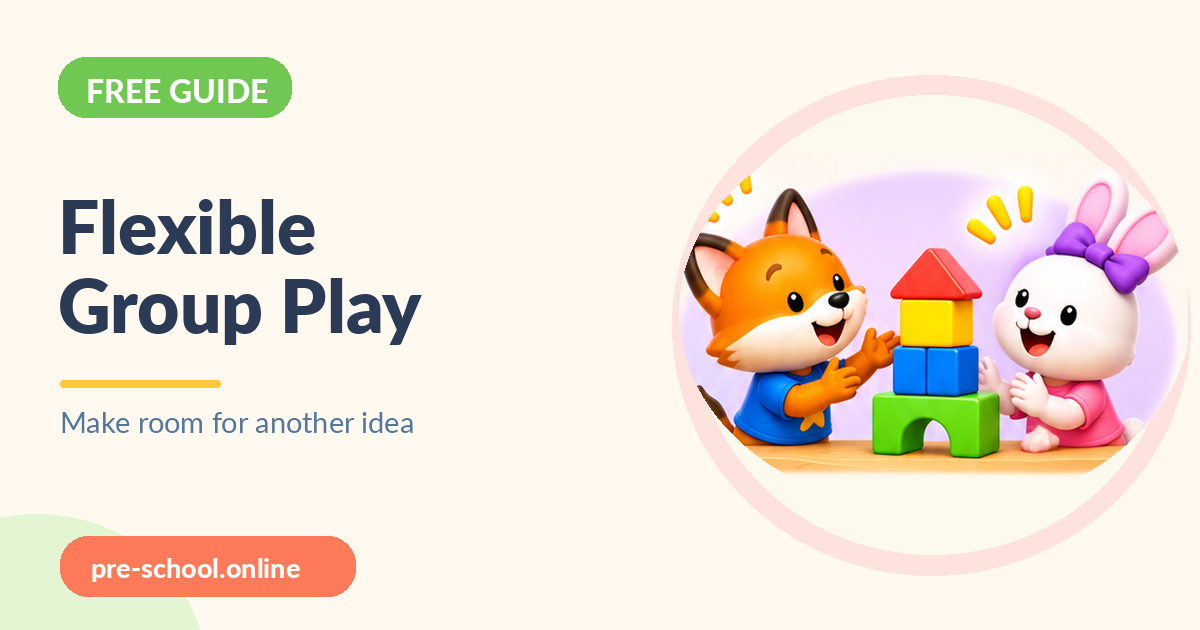
One child wants the blocks to be a zoo. Another wants a train station. Neither idea is bad, yet the disagreement can end the game before it begins. Preschoolers are still learning to hold an idea in mind, listen to someone else and change a plan while managing disappointment. Adults can model a flexible response without requiring children to give up all their preferences.
Accepting another idea is different from surrendering boundaries. A child may decline a game, choose to watch or say they do not like the proposed rule. The useful skill is being able to listen, propose a variation and seek a fair solution. Work on that skill in calm, low-stakes play before expecting it during a heated argument.
- For families and preschool educators
- Hands-on and age-appropriate
- Adaptable for real classrooms
Key Takeaways
- One child wants the blocks to be a zoo.
- Start with two children, a shared set of large blocks and a short play window.
- Flexibility is a relationship skill, not a demand to comply with peers.
Why This Approach Matters
Accepting another idea is different from surrendering boundaries. A child may decline a game, choose to watch or say they do not like the proposed rule. The useful skill is being able to listen, propose a variation and seek a fair solution. Work on that skill in calm, low-stakes play before expecting it during a heated argument.
Starting point: A useful preschool activity should make room for the child to look, move, talk, point, draw or participate in another accessible way. Adults can model once and then adjust the activity instead of increasing pressure.
Before You Begin
Start with two children, a shared set of large blocks and a short play window. Choose a cooperative goal—build one road, make a pretend meal or sort animals together. Avoid competitive elimination games as the first example. Make space for children with sensory or communication differences and remind everyone that nobody has to accept unsafe or unkind ideas.
Eight Practical Activities and Strategies
1. Name both ideas without taking sides
Say, “You want a zoo, and your friend wants a station.” Repeat each idea accurately without calling one more creative or reasonable. This gives children time to feel heard. Follow with a real question, “Is there a way we can use both?” If they cannot answer, offer one possible bridge rather than lecturing about sharing.
2. Teach a short bridge phrase
Practice “What if we …?” or “Can we try your idea next?” through puppets. Young children can point to two picture cards rather than use the exact words. Adults should model the phrase while playing, not demand it as an apology or magic sentence. The goal is language that opens negotiation, not a performance that earns praise.
3. Use an “and then” build
Invite one child to add a room and the other to add a road. Describe the changes: “First there was a zoo, and then your road came through.” Ask whether the two structures can connect. A collaborative story gives children a concrete reason to consider a new idea while allowing the original creation to matter.
4. Offer two fair options when ideas cannot combine
Sometimes the ideas genuinely conflict. Offer choices such as building two sections side by side or taking turns choosing the theme after an agreed brief period. Use a visible timer only if it supports children rather than raising anxiety. If either option is unsafe or unfair, say so and propose another.
Free related resource: For additional ways to practice, explore Pre-School.online’s relevant feelings and behavior resource. The steps in this article can be used on their own.
5. Invite a leader switch without winners and losers
Use a cooperative drawing or movement game where one child suggests a safe action and the next child adds an action. Avoid ranking “best idea.” Children practice listening when they know they will also get an opportunity to contribute. For those who struggle in groups, start with an adult and one child before adding peers.
6. Teach respectful disagreement
Make room for “I do not want that game” and “I have another idea.” These are legitimate social messages when expressed respectfully. Model how to respond: “Okay, you can build here, and we can play there.” Flexibility is not forcing a reluctant child into a group. Offer an observer role or independent activity when needed.
7. Repair after a disagreement
When voices rise, pause the play and support regulation. Later ask children to describe what happened using a toy or drawing. Offer a repair like returning a block, rebuilding a damaged part or inviting another try. Adults should not force eye contact, hugs, or apologies. A meaningful repair shows understanding of the effect on others.
8. Notice small flexible moments
Point out specific action: “You listened and tried your friend’s road idea.” Avoid labels like “good sharer” that imply identity is fixed. Some children show flexibility by watching quietly, offering a different color or tolerating a brief change. Track these small responses and revisit the game another day.
At Home and in the Classroom
At home
Use family pretend play or collaborative drawing with a sibling or adult. Deliberately model a gentle change to a plan: “I had a different idea. I can try yours first, and then we can decide.” Avoid inventing conflicts just to teach a lesson.
In preschool or a group
Introduce cooperative goals in small groups, with enough materials to prevent artificial scarcity. Teach brief phrases on picture cards, include a calm observer role and support repair after disagreements. Note whether certain noisy or crowded arrangements are causing trouble.
In either setting, watch for engagement and comfort. If an activity creates pressure or becomes too complex, offer a smaller entry point and revisit it another day. Learning through play can be both purposeful and responsive.
Worked Example: What It Looks Like
During block play, Mia wants a hospital and Sam wants a fire station. The adult listens to both, then offers a simple connection: “What if a fire truck brings an injured teddy to the hospital?” Mia agrees to build a doorway, while Sam makes a garage. After three minutes, Sam wants to change the whole building. The teacher says, “Our first plan still matters. We can add a new space or start something separate.” The play continues without one child winning.
Notice the adult response: The activity changes when the situation changes. Supporting a child’s thinking, communication or safety matters more than completing a preset script exactly.
A Flexible Five-Day Plan
This plan is a menu, not a set of milestones to pass. Spend a few minutes on the invitation each day, repeat an activity the child enjoys, and choose the safest materials available in your setting.
| Day | Try this |
|---|---|
| Monday | Practice naming two different ideas with puppets; do not require agreement. |
| Tuesday | Join two toy-building ideas with one simple “and then” story. |
| Wednesday | Offer two fair choices when plans cannot be combined. |
| Thursday | Let children alternate adding one idea to a collaborative drawing. |
| Friday | Reflect on a moment of listening, change or respectful disagreement. |
At the end of the week, note one thing the child asked about, tried, changed or explained. These observations help adults plan the next invitation without assigning grades to preschool play.
Adaptations and Accessibility
- Let children choose to point, gesture, draw or use AAC to express ideas.
- Use small groups and visual turn cards for children who find open-ended negotiation hard.
- For children sensitive to change, give a brief preview before the shared plan shifts.
- Extend the activity by asking older preschoolers to invent two different fair solutions.
Follow individualized education, communication, sensory or health plans when relevant. A child’s home language, culture and preferences should shape participation rather than be treated as obstacles to learning.
What Matters Most
Flexibility is a relationship skill, not a demand to comply with peers. Adults should distinguish a child who is setting a healthy boundary from a child who needs support tolerating small changes. Avoid praising self-erasure as cooperation.
When Things Do Not Go to Plan
If one child always directs the play, adults can protect equal opportunities by offering separate spaces and planned turns. If a child becomes overwhelmed, pause the lesson and help them regain calm. Revisit the story later, when everyone can think. Persistent group difficulties are a cue to adapt the environment and collaborate with caregivers, not label a child selfish.
Frequently Asked Questions
Should my child always try a friend’s idea?
No. They can respectfully decline, ask for another option or choose independent play. Cooperation includes boundaries.
What if the children disagree about every rule?
Reduce the scope: agree on one shared goal or create separate play zones. Start with a short, positive experience.
Are timers good for sharing?
Sometimes. Use a timer only when both children understand the plan and it decreases conflict rather than intensifying it.
Should adults require an apology before play resumes?
Support a meaningful repair when children are calm, rather than insisting on rehearsed words or physical affection.
Explore Free Preschool Resources
Use these Pre-School.online pages when they fit your child’s questions and your available time. The practical steps above are complete without needing to buy a kit or click away.
Explore the matching free activitiesSee another relevant resource
Sources and Further Reading
- NAEYC: Developmentally Appropriate Practice
- Head Start: Social and Emotional Development
- Pre-School.online: Social and Kindness Games
- Pre-School.online — Matching Preschool Resource
Editorial learning guide for families and educators. Educational information is not individualized medical, developmental, emergency or product-safety advice; follow applicable program policies and qualified professional guidance.