
Home › Blog › Screen-Free Play
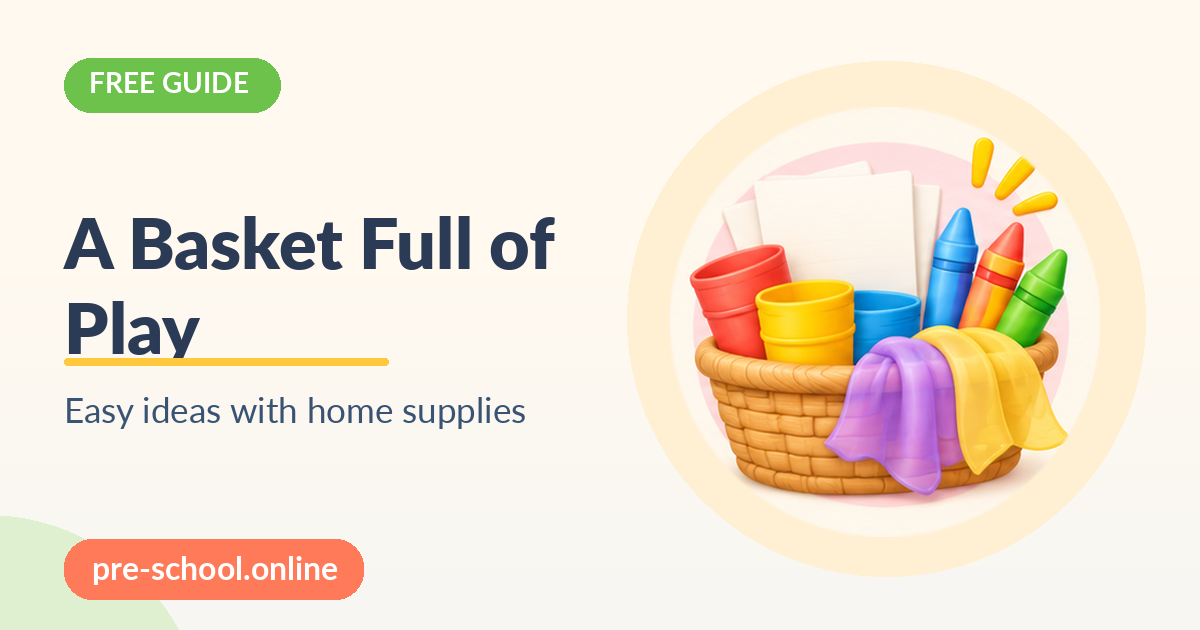
Some preschool activities fail not because the idea is bad, but because they need a shopping trip and 30 minutes of setup. An activity basket is the opposite: a small, supervised collection of safe household materials that can become a sorting game, art invitation, pretend shop or storytelling station. Choose one purpose, prepare only a few objects and keep the experience open-ended.
A useful basket is not a toy dump. Three to five thoughtfully chosen materials invite more focused exploration than an overflowing bin. The goal is not to make children entertain themselves for hours; it is to make it easy for an adult and child to begin meaningful play together, then allow independence when the child is comfortable and supervised.
Key Takeaways
- Begin with one open basket and three to five age-appropriate items.
- Use household materials that are clean, sturdy and safe for your child.
- Choose a clear play invitation instead of filling the basket randomly.
- Rotate materials when interest fades, rather than buying more toys.
- Supervise play and remove anything small, sharp, damaged or risky.
Build the Basket Safely Before Thinking About Themes
Use a stable open container without a heavy lid. Check every item for sharp edges, loose parts, cords, buttons and choking risks, especially if younger siblings may reach the materials. Choose large, washable objects that suit your child’s age and habits. Avoid water beads, loose magnets, button batteries and small detachable pieces.
Keep the basket in view and explain where materials stay. For art, use washable non-toxic supplies appropriate to the child; for pretend food, use clean, unbreakable objects. An activity basket is an invitation to play, not a license to leave children alone with tools or small items.
Try this today: Choose the first idea below, model it once, and follow your child’s response. Short, friendly practice gives you better clues than a rushed quiz.
6 Practical Activities You Can Try Today
Each idea includes a clear setup, an action you can model, and an easier or more challenging version. You can use these at home or adapt them for a small preschool group. Stop an activity if the child is uncomfortable or the materials are not safe.
- Color and texture sorting basket
Set up: Add three large fabric squares, two smooth blocks and several large colored paper pieces.
Try it: Invite your child to group by color or texture. Ask, “What feels soft? Which pieces are blue?” and let them reorganize in their own way.
Make it fit: For younger children, start with only two colors. For older children, invent a rule and see if you can follow it.
- Pretend café basket
Set up: Add a clean unbreakable bowl, a large spoon, a cloth napkin and empty food cartons with safe edges.
Try it: Play customer and cook. Ask for a “menu,” take turns ordering and count pretend portions without needing any real food.
Make it fit: Use a paper order pad for emergent writing. Avoid small fake food that could be swallowed.
- Storytelling basket
Set up: Add two large soft toys, a folded cloth for a landscape and a cardboard building.
Try it: Start a story: “The bear wants to find a friend.” Let the child move the figures and decide what happens next.
Make it fit: Introduce beginning, middle and end with three large picture cards if the child enjoys structure.
- Shape-building basket
Set up: Add large cardboard shapes and sturdy blocks with no tiny parts.
Try it: Challenge your child to build a house, bridge or road. Ask which shapes they used and what makes the structure stand.
Make it fit: Let an older preschooler sketch the finished building; avoid exact-model pressure.
- Art invitation basket
Set up: Add big paper sheets, chunky washable crayons and a few wide paper strips.
Try it: Invite the child to make a “weather picture” or design a pretend postcard. Show where to return supplies afterward.
Make it fit: For children who dislike drawing, offer collage with adult-handled adhesive or simply scribble and discuss colors.
- Movement prompt basket
Set up: Place large cards showing safe movements: stretch, march, balance beside a wall, or pretend to fly.
Try it: Draw one card at a time and do the movement together in an uncluttered area. Let the child invent the next prompt.
Make it fit: Choose seated or smaller movements when space is tight; avoid hopping near furniture.
A Gentle Five-Day Practice Plan
Use these as small invitations, not assignments that must be finished. Repeating an enjoyable idea is absolutely fine. On a busy day, one conversation or one five-minute game can be enough.
- Set up one basket with four large safe items; join the first few minutes of play.
- Try a second theme only if the first one is losing its appeal.
- Let your child choose two materials to keep and one to put away.
- Photograph or describe a creation before tidying; celebrate the process.
- Invite the child to help plan next week’s basket using existing household items.
Watch what happens when you change only one thing: the number of choices, the materials, the timing, or the amount of adult help. Keep the version that helps your child participate with confidence, and leave the rest for another day.
Common Problems and What to Try
Everything is tipped onto the floor
Try fewer items and demonstrate the play invitation once. Spills are information about what the child wants to explore; keep materials safe and manageable.
The basket is ignored
Change the invitation, not necessarily the supplies. The same cardboard can become a road, stage or shopping counter.
A sibling is younger
Use only materials safe for the youngest child present, or separate play zones with direct adult supervision and secure storage afterward.
For educators: Share one concrete observation and one successful adjustment with the family. For families: tell the teacher what your child enjoys and what usually helps. A shared picture of the child’s strengths is more useful than comparisons or blame.
Frequently Asked Questions
How many items belong in a preschool activity basket?
Three to five well-chosen items are often plenty. Adjust to your child’s interests and ability to keep track of the materials.
Can preschoolers use activity baskets independently?
They may play more independently over time, but adults still need to supervise and assess materials, especially when siblings or craft supplies are involved.
Do I need special sensory fillers?
No. Everyday large, safe objects can support sorting, pretend play and storytelling. Avoid hazardous fillers such as water beads.
Free Preschool Resources to Put This Into Practice
These verified Pre-School.online pages contain activities or learning materials relevant to this guide. Choose the resource that best fits your child’s interest and readiness; there is no need to complete everything.
Related Reading and Resources
Sources and Credits
For educational information only. Activities require age-appropriate materials and adult supervision. This article does not replace medical, developmental, or professional safety advice. Consult a qualified professional about individual concerns.